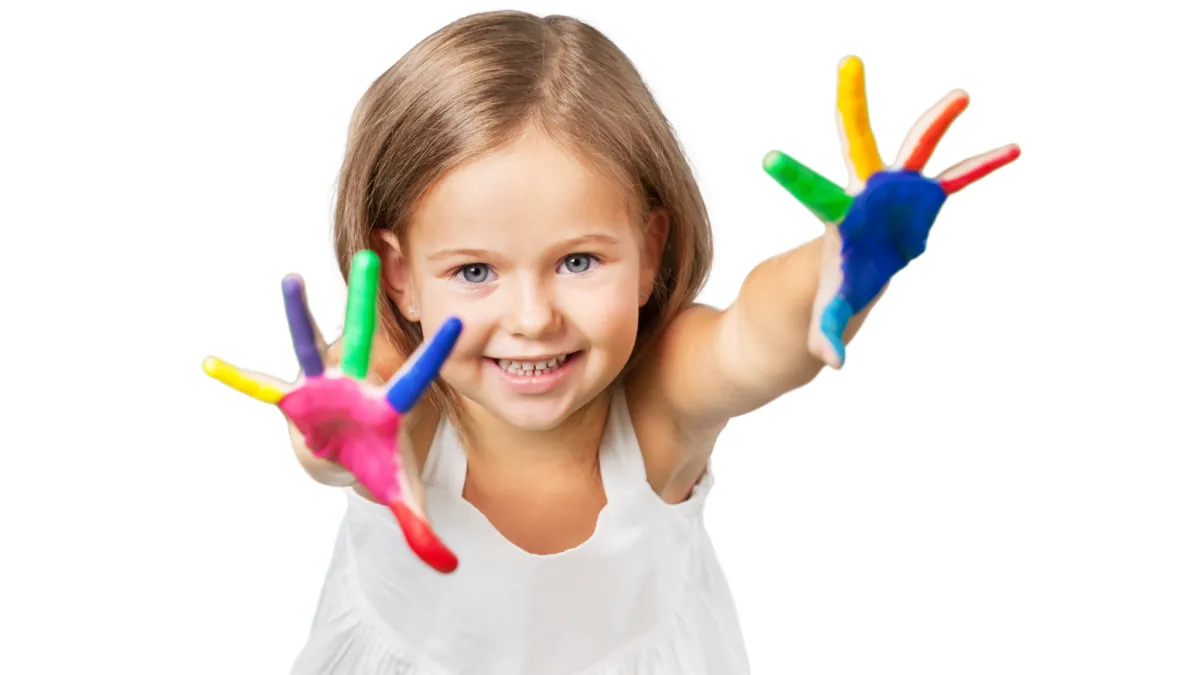
Your Child Is Not a DIY Project
Chandra Eden, The True Me Yogi
Raising Our Children, Raising Ourselves
Author: Naomi Aldort
“If we want children to flourish, to become truly empowered, then let us allow them to love themselves without condition. Why do we keep trying to mold them into what we think they should be? Why not help them become more of who they already are? A child’s spirit is not something to be managed or controlled. It is something to be understood, guided, and encouraged.”
Your Child Is Not a DIY Project
Somewhere along the way, parenting became suspiciously similar to assembling furniture from a store that specializes in emotional collapse and tiny hex keys.
We were told children should be optimized. Improved. Corrected. Managed. Their behavior tracked like stock portfolios. Their emotions treated like software glitches requiring immediate updates. We reward “good” children, redirect “difficult” ones, and quietly panic when our child turns out to be an actual human being instead of a motivational poster in Crocs.
And yet, as Naomi Aldort points out in Raising Our Children, Raising Ourselves, children are not meant to be molded into our preferred shape. They are meant to unfold. Which is both beautiful… and deeply inconvenient for anyone who hoped parenting would involve more control and fewer public meltdowns in Target.
The problem is that many parents unconsciously approach children like sculptors hacking away at marble.
Too loud? Chip that away.
Too emotional? Sand it down.
Too shy? Push harder.
Too sensitive? Toughen them up.
Meanwhile the child is standing there, emotionally barefoot, wondering why love suddenly feels so connected to performance.
A child’s spirit does not unfold through constant correction. It unfolds through safety. Through being seen clearly enough that they don’t have to spend half their life recovering from becoming someone else in order to keep connection.
Which is uncomfortable news for adults, because most of us were raised on behavior management disguised as character development.
Many people grew up hearing versions of:
“Stop crying.”
“Don’t be dramatic.”
“Good kids don’t act like that.”
Translation:
Certain parts of you are inconvenient.
So now, without realizing it, parents often try to engineer children away from discomfort instead of helping them move through it.
But children are not machines with defective settings.
They are tiny nervous systems trying to understand:
who they are
whether they are safe
and if they are still lovable when they are struggling
Which, honestly, is also what most adults are doing. Just with more caffeine and password fatigue.
The irony is that the harder we try to control children, the less connected they often become. Because control may change behavior temporarily, but connection changes identity. A child who feels deeply seen develops something far more valuable than obedience:
They develop self-trust.
And self-trust changes everything.
A child with self-trust is more likely to:
speak up when something feels wrong
recover after failure
try again without collapsing internally
develop an inner voice that sounds supportive instead of punishing
That voice matters more than most parents realize.
Because eventually, your child will grow up and you will not be standing beside them narrating their worth. They will do that themselves.
The question is:
What voice are they practicing now?
This does not mean children need no guidance, boundaries, or correction. Of course they do. Tiny humans would absolutely eat frosting for dinner while wearing swim goggles to school if left completely unsupervised.
But guidance and control are not the same thing.
One says:
“I will help you navigate who you are.”
The other says:
“I will decide who you should become.”
And children feel the difference.
The beautiful thing is that unfolding does not require perfect parenting. Thank God, because humanity would end immediately.
It requires awareness.
A pause before reacting.
Curiosity before assumption.
Connection before correction.
Small moments where a child learns:
“I can feel this and still be safe.”
“I can make mistakes and still be loved.”
“I do not have to become someone else to belong.”
That is how children unfold.
Not through pressure.
Not through performance.
But through the quiet experience of being deeply known… and still welcomed.
