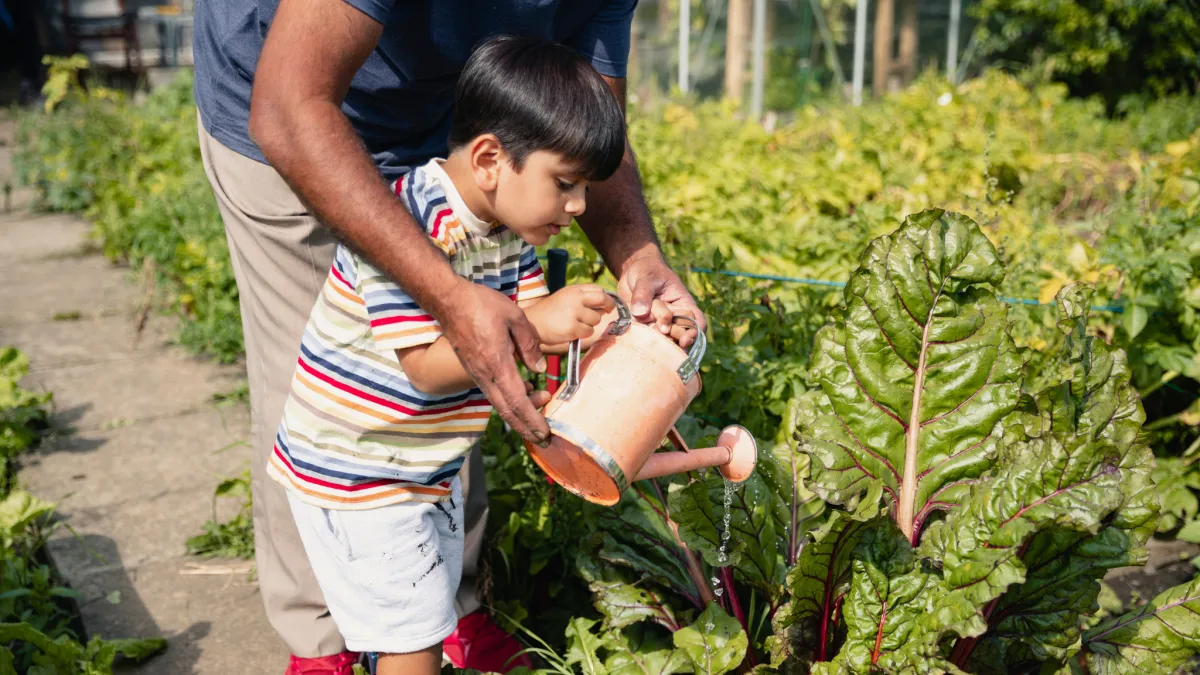
The Helpful Parent's Trap: When Helping Hurts
Chandra Eden, The True Me Yogi
Life Code
Author: Dr. Phil McGraw
"By now your instincts should be telling you there are people out there, and probably in your life, who are just not okay. I don't want you to panic, and I don't want you to become a cynic, but I do want you to listen to that inner voice - a voice that may give you the unease that security specialist Gavin de Becker calls 'the gift of fear.'
...Whatever you do, don't ignore that feeling. I know that goes against how you think you should behave. We've been told since childhood that we should give people the benefit of the doubt, that we should trust people."
The Helpful Parent's Trap: When Helping Hurts
Parents are natural problem solvers.
We tie the shoes because it's faster.
We zip the coat because we're already late.
We pour the milk because cleaning up a spill sounds significantly less appealing than drinking one.
Before we know it, we've become the personal assistant to a very small CEO who believes socks simply materialize on feet by magic.
Helping feels loving.
Sometimes it is.
But sometimes, the kindest thing we can do is step back just enough for our children to discover, "I can do this myself."
More than 150 years ago, educator Friedrich Froebel understood something that modern neuroscience and Neuro-Linguistic Programming (NLP) continue to support: confidence doesn't come from being rescued. It comes from repeated experiences of competence.
Independence Isn't Born. It's Practiced.
Children don't wake up one morning magically capable of buttoning shirts, solving disagreements, or packing school bags.
They become capable by doing those things...often imperfectly.
Very imperfectly.
There may be shoes on the wrong feet.
Inside-out shirts.
Sandwiches containing far more peanut butter than bread.
Those aren't failures.
They're evidence that learning is happening.
Every time we allow children to struggle within their abilities, we're giving them something far more valuable than efficiency.
We're giving them ownership.
The Difference Between Helping and Taking Over
One of the most useful questions a parent can ask is:
"Am I making this easier for my child...or easier for me?"
There's nothing wrong with helping when a child truly needs assistance.
The problem comes when we routinely solve problems they are capable of solving themselves.
In NLP, we often talk about state. A person's emotional state influences what they believe they can accomplish.
When children repeatedly hear:
"Let me do it."
Their unconscious mind may quietly conclude:
"Maybe I can't."
But when they hear:
"I know this is tricky, but I think you've got it."
They're given a completely different message.
"Someone believes I'm capable."
That belief becomes part of their identity.
Awaken the Problem Solver
Froebel wrote that education should awaken, not simply teach.
That's a beautiful distinction.
Teaching often provides answers.
Awakening creates thinkers.
Instead of rushing in with solutions, try asking questions:
"What's another way you could try?"
"What do you think would happen if...?"
"Which part feels hardest?"
These kinds of questions engage a child's brain rather than replacing it.
NLP calls this directing attention. The questions focus the child's mind on possibilities instead of obstacles.
Over time, children begin asking those same questions internally.
That's the beginning of resilience.
Celebrate Effort, Not Just Success
Parents often wait until something is done perfectly before celebrating it.
But confidence grows long before perfection arrives.
Notice the effort.
"I saw how patient you were while tying those shoes."
"You kept trying even after it was difficult."
"You figured that out all by yourself."
Those comments reinforce something much deeper than the task.
They reinforce capability.
And capable children become capable adults.
Give Them the Chance to Surprise You
Children frequently become exactly as capable as we expect them to be.
If we assume they're too little, too forgetful, or too clumsy, we unintentionally lower the bar.
If we assume they can learn with encouragement and practice, something remarkable happens.
More often than not...
They do.
Not perfectly.
Not immediately.
But steadily.
The next time your child insists, "I can do it myself," you may feel a tiny wave of panic as visions of spilled cereal, tangled shoelaces, and toothpaste explosions flash before your eyes.
Take a deep breath.
Those little messes are often the tuition we pay for raising confident, capable human beings.
After all, the goal isn't to raise children who always need us.
It's to raise adults who know they can rely on themselves.
