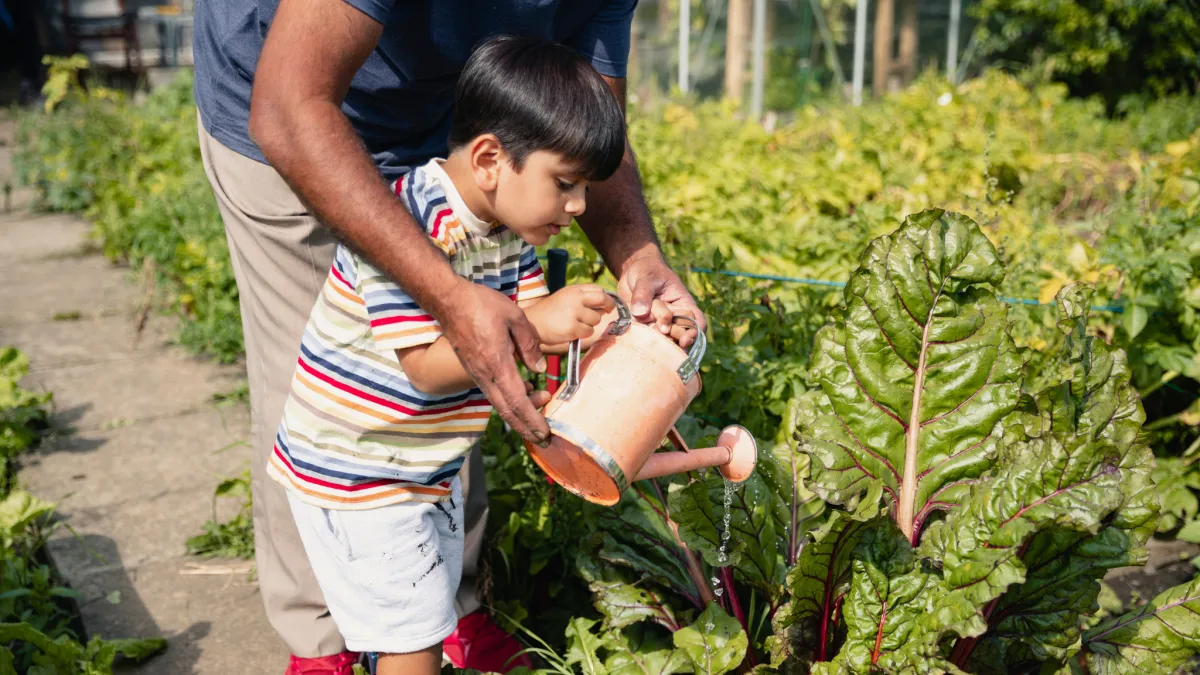
Don't Steal Their "I Did It!" Moment
Chandra Eden, The True Me Yogi
The Education of Man
Author: Friedrich Froebel
"The child should be strengthened to be independent in the attainment of all that is within his powers. Help that hinders self-help is not true help. The aim of education is not merely to teach, but to awaken."
Don't Steal Their "I Did It!" Moment
There's a magical phrase every parent longs to hear:
"I did it!"
It usually arrives with a grin, a slightly crooked accomplishment, and perhaps a trail of glitter, toothpaste, or flour leading to the scene of the victory.
As adults, we're often tempted to smooth the path for our children. We tie the shoes because we're in a hurry. We solve the puzzle because they're getting frustrated. We answer the question before they've had a chance to think.
After all, we're helping.
Or are we?
Friedrich Froebel, the founder of kindergarten, believed the goal of education wasn't simply to fill a child's mind with information. It was to awaken something already inside them: curiosity, confidence, and the belief that they could learn.
That idea aligns beautifully with one of the central principles of Neuro-Linguistic Programming (NLP): the beliefs we develop about ourselves shape what we attempt, what we avoid, and ultimately who we become.
Every Rescue Sends a Message
When we constantly jump in to save the day, children don't just receive our help.
They receive a message.
Sometimes that message is, "You're not quite capable."
Of course, that's rarely what we intend. We simply want to spare them frustration, save time, or avoid another puddle of spilled milk spreading across the kitchen floor like a dairy-themed science experiment.
But children aren't only learning how to do things.
They're learning who they are.
Confidence Is Built, Not Bestowed
NLP teaches that our identity is shaped by repeated experiences.
A child who repeatedly hears, "Let me do it," begins to expect someone else to solve problems.
A child who hears, "Give it another try. I know you can figure this out," begins building an entirely different belief:
"I'm someone who can learn."
That's a belief worth protecting.
Notice that this doesn't mean leaving children to struggle endlessly. Good coaching isn't about disappearing. It's about offering just enough support that success still belongs to them.
Think of yourself as the spotter at the gym. You keep the weight from crushing them, but you don't lift it for them.
Questions Grow Stronger Kids
One of the simplest NLP techniques is asking questions that direct attention toward solutions.
Instead of:
"Here, let me fix it."
Try:
"What's another way you could try?"
Or:
"What do you think would happen if...?"
Questions invite children to think. Thinking builds confidence. Confidence encourages action. And action creates experience, which becomes the evidence behind healthy self-belief.
It's a wonderfully upward spiral.
Celebrate Progress, Not Perfection
Children don't need to master every skill overnight.
They need opportunities to improve.
The shoes may be on the wrong feet.
The bed may look as though it was made during an earthquake.
The peanut butter may outnumber the bread.
That's okay.
The goal isn't a perfect result.
The goal is a child who believes, "I can keep learning."
Ironically, today's messy attempts often become tomorrow's effortless habits.
Let Them Keep Their Victory
As parents, we naturally want to make life easier for our children.
But sometimes the greatest gift isn't making the task easier.
It's allowing them to discover they're stronger than they imagined.
So the next time you're tempted to swoop in and save the day, pause for just a moment.
Give your child the chance to wrestle with the zipper, solve the puzzle, or carry the grocery bag that's just a little too heavy.
Because the greatest reward isn't that the job gets done.
It's hearing those three unforgettable words:
"I did it."
Those words don't just describe a completed task.
They reveal a growing identity.
